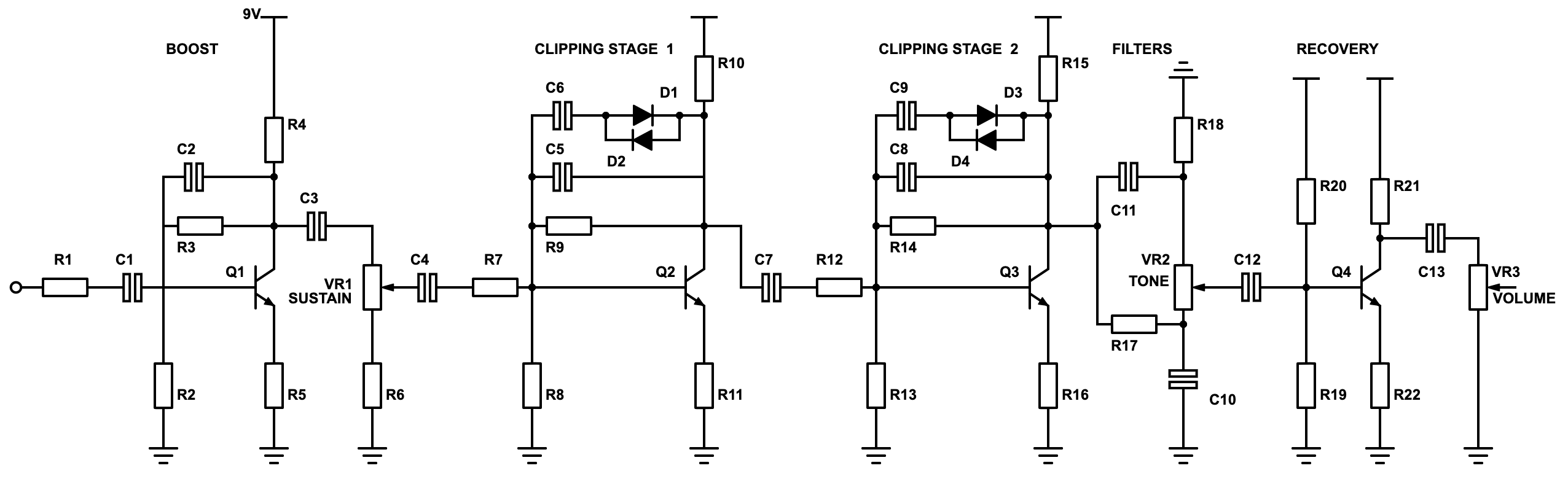
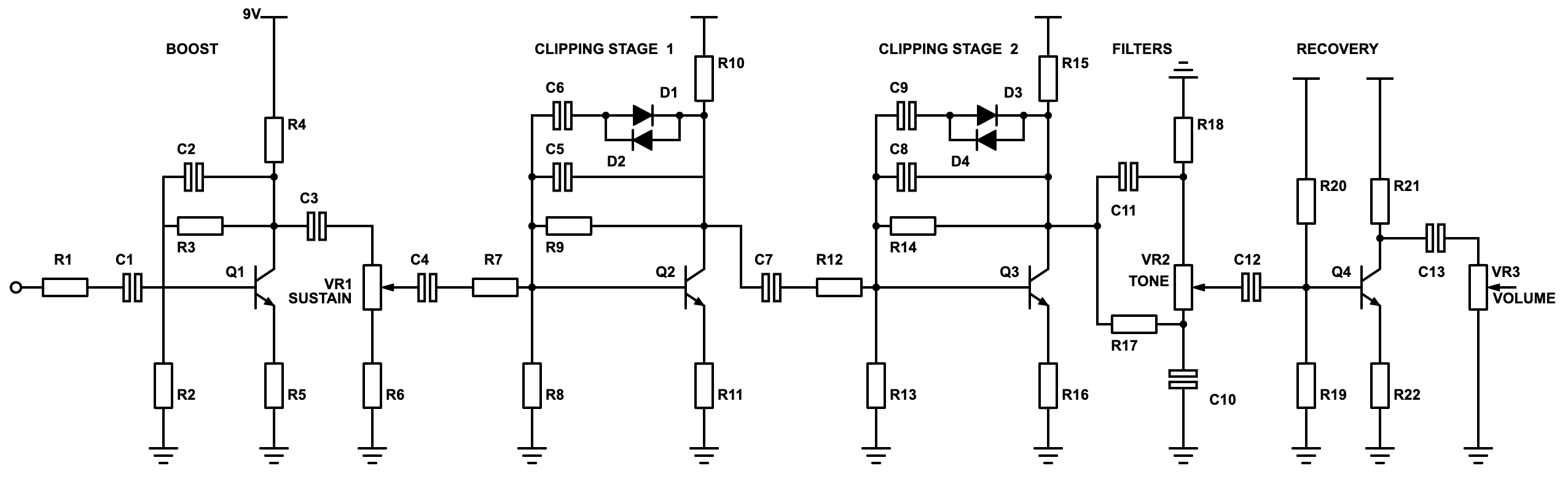
I used Kit Rae schematics, but I did not follow the same component numbering, as I don’t find it all that intuitive. Kit did it that way for a good reason, this way works better for my brain. There’s also this excellent post by Kit Rae on the EHX forum, broadly describing differences between versions.
GENERIC BIG MUFF SCHEMATIC
ELECTRO-HARMONIX BIG MUF PI COMPONENT VALUES TABLE
GENERIC BIG MUFF LAYOUT – WIDE
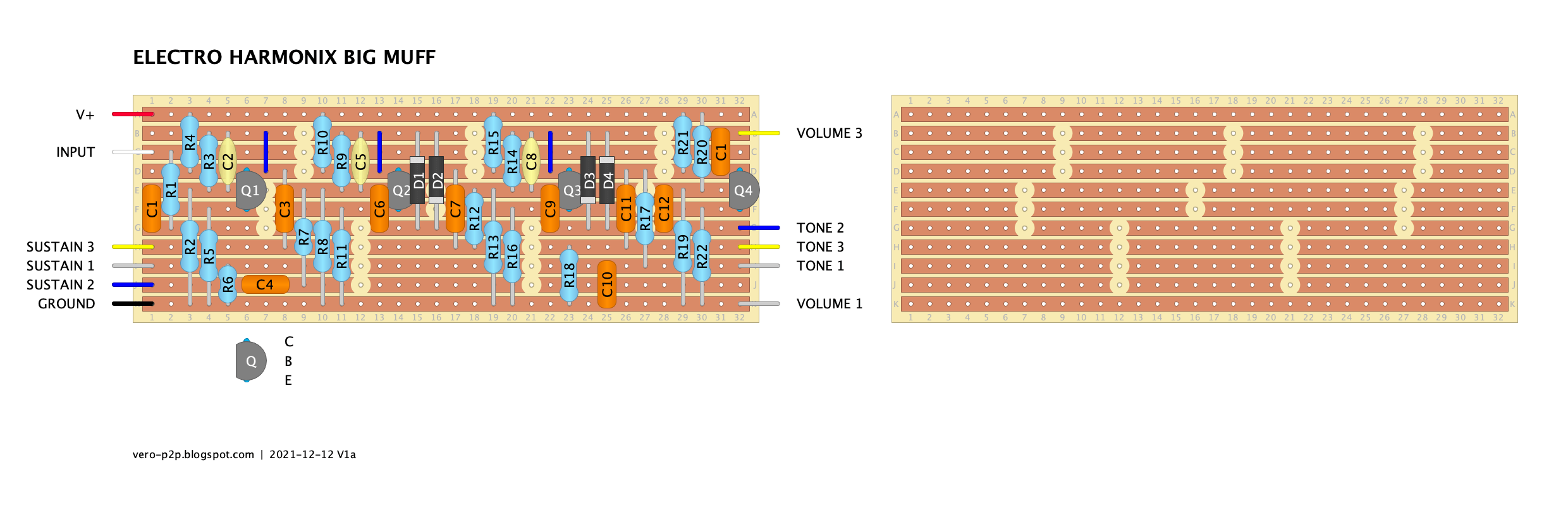
If you want to add power filtering, just add an extra row at the top – if you’re read this far, I’m sure you can work it out.
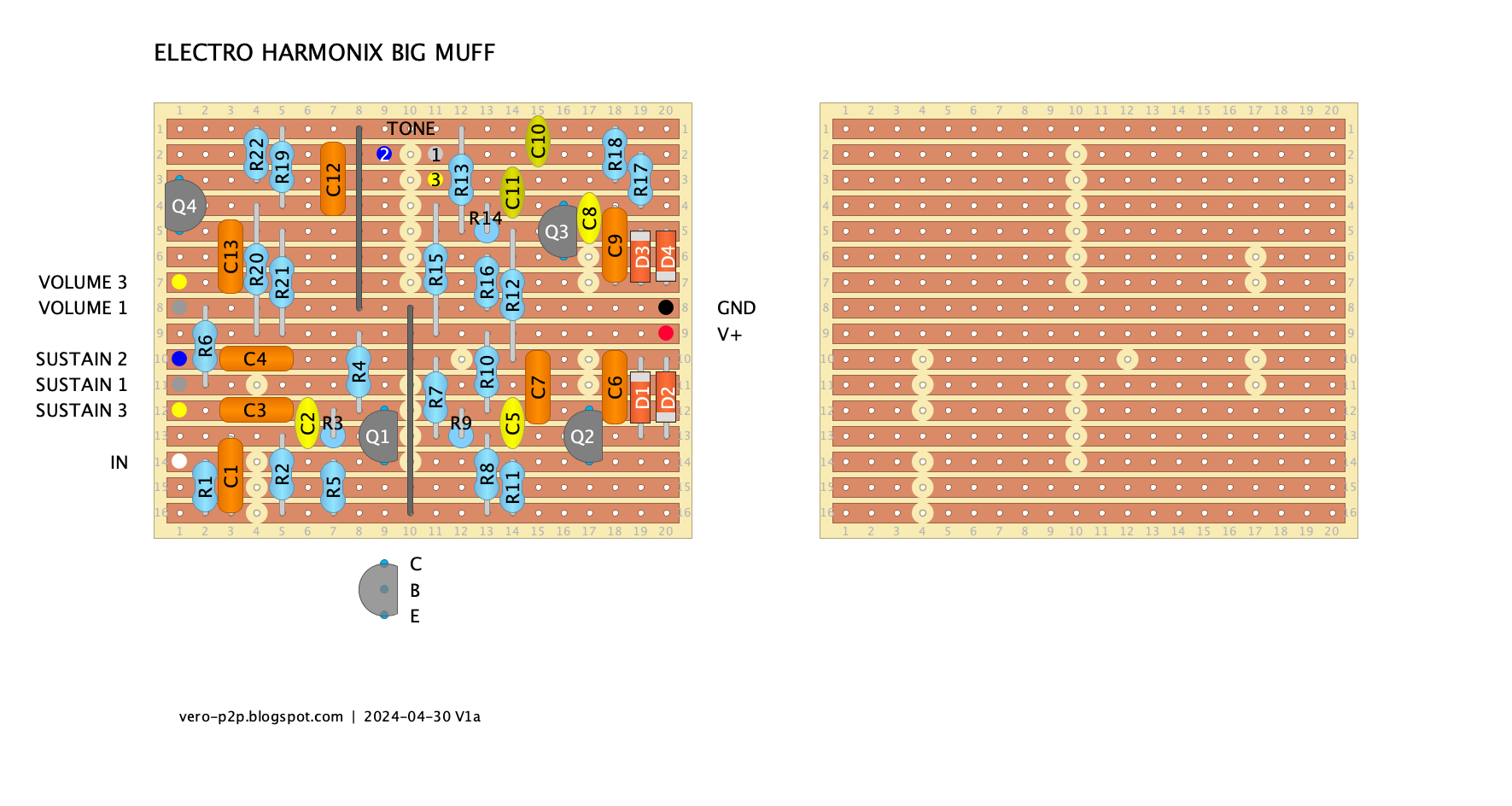
GENERIC BIG MUFF LAYOUT
GENERIC BIG MUFF SCHEMATIC WITH CAPACITOR POLARITY MARKED
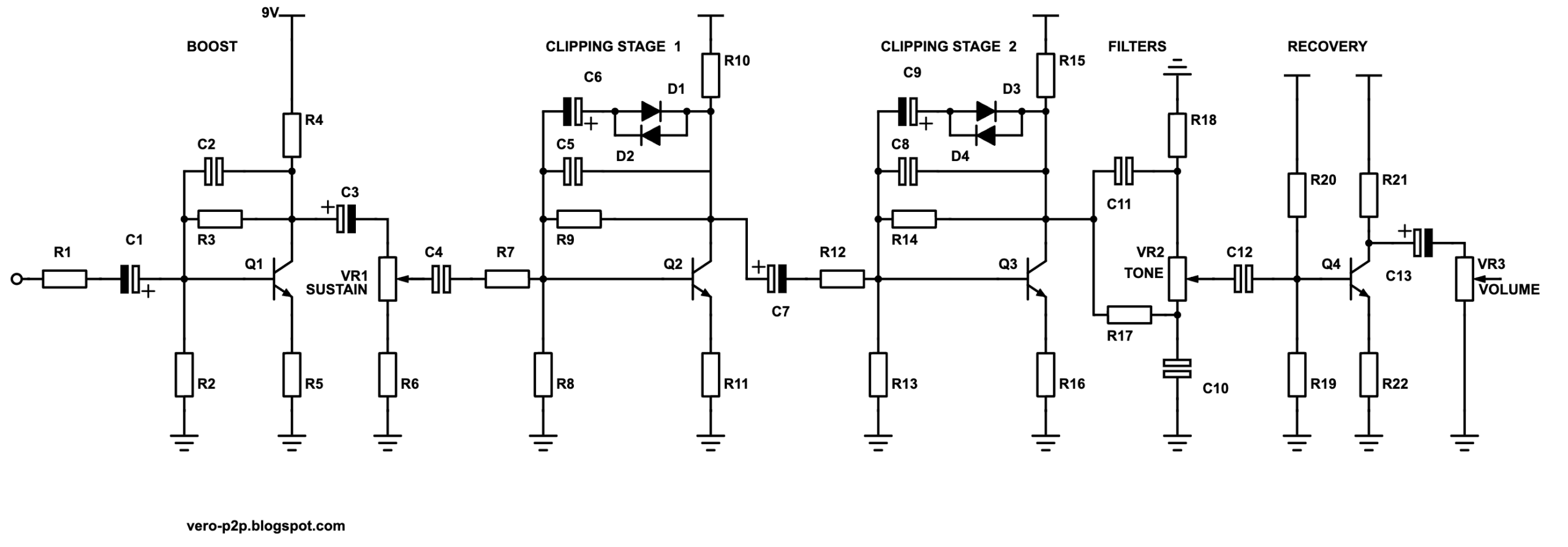
BUILD TIPS
There are no magic parts in a Big Muff. It’s a well designed circuit and the fact that so many value changes occurred over time and it still sounds like a Big Muff is testament to that.
Transistors
Don’t stress about getting the “right” transistors. There’s really quite minimal differences between most transistors – certainly don’t spend a lot of money on rare / vintage for a Big Muff. I know there are lengthy online discussions around what the right hfe is, after spending a lot of time testing on a breadboard with guitar in hand, I decided that it doesn’t really matter that much.
Diodes
Again, subtle differences for the most part. Practically any small signal silicon diode does the job.
Resistors & Capacitors
Values are important, the type is not.
I will say that some of the odd values seen on the filter section are worth trying to attain. example 4n and 12n. If you substitute different values, it will obviously still work, but it doesn’t sound the same – the filter section is such a big part of the Big Muff sound.