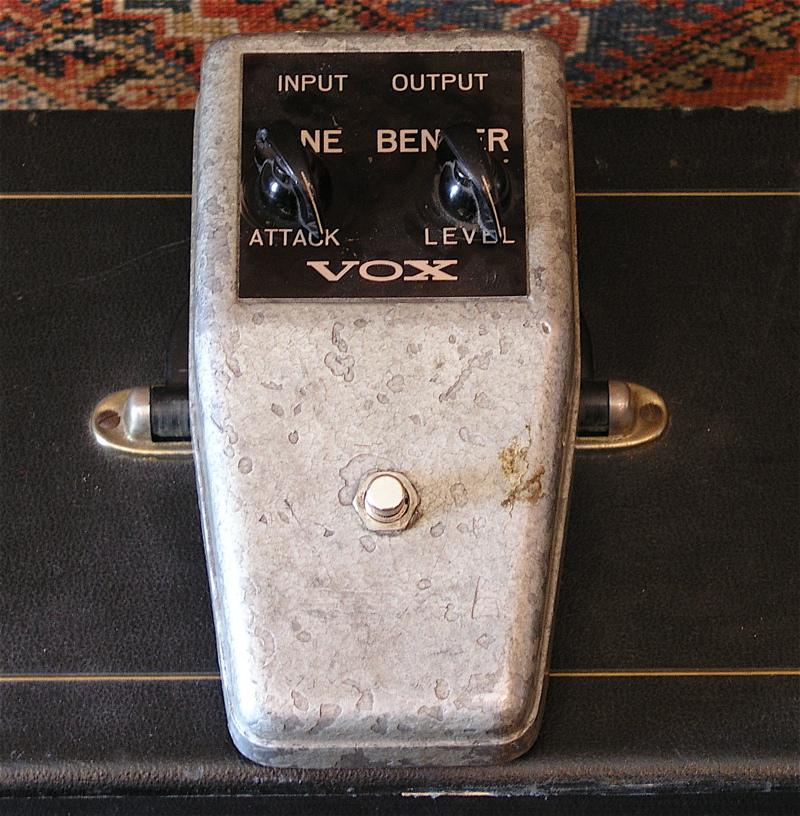
The Vox Tonebender circuit ranks as one of the earliest Fuzz Pedals available. Here’s some info from http://www.legendarytones.com/fuzz%20feast1.html:
“The oldest fuzz in our collection, this 1966 Vox Tone Bender was made famous by that group of British lads known as the Beatles. This unit is a simple design, uses two germanium transistors and is built, and feels like, a tank.
The sound of the early Tone Bender is a cross between a device like a Dallas Rangemaster treble booster and a Fuzz Face. At maximum fuzz settings, it has a little bit less fuzz than an early germanium-equipped Fuzz Face. In addition, the frequency response curve and output of the unit emphasize the upper frequencies more so than any Fuzz Face, whether germanium or silicon. The resulting tone when cranking up the fuzz control (appropriately labeled “Attack”) is a very raspy-sounding fuzz that is very pronounced and aggressive on the top end. In some applications such as using it against a brighter amplifier, the Tone Bender may be considered a bit much for the ears to take as it can easily be made to sound like a piercing buzz saw. I suppose the Vox folks warned us with the “Attack” label however…
But interestingly enough, using the Tone Bender with a cranked up Vox AC-30 which can then produce a lot of low-end and compression courtesy a quartet of EL84 tubes, the Tone Bender makes a nice solo lead boost to use to and balances the overall tone nicely. And in another application, when using the Tone Bender through a Vox AC-30’s Brilliant “Top Boost” channel and cranking it up, the fuzz tone is very psychedelic ‘60s in flavor and buzz.
Not surprisingly, when using the Vox Tone Bender through an amp set purely clean, the fuzz tone is very crunchy, with medium gain, and again with an emphasis on a lot of mid and high-end bite.”
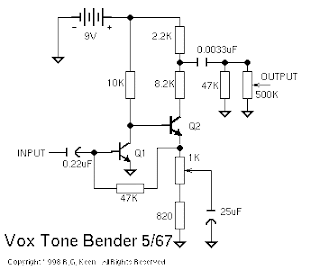 |
| From Geofex.com |
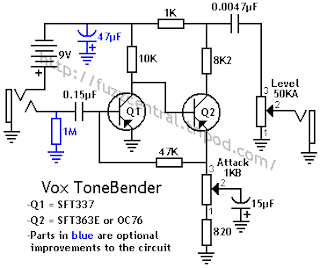 |
| From Fuzz Central |
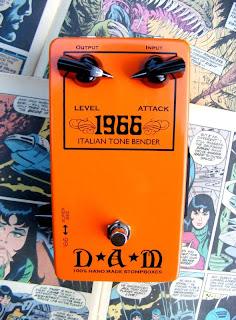
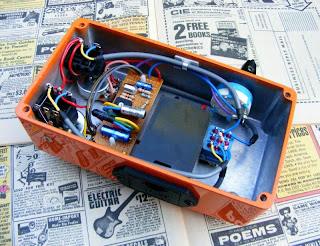
The D*A*M “1966” features…
1. High quality gain selected pair of germanium transistors that are correctly set up to produce a bold clear dynamic tone with a good amount of sustain. An OC76 is just always used in the second position of the circuit. The transistor in the first position will vary depending on stock levels usually an AC125, OC75 or a SFT353 will be used.
2. High grade parts including Ero Vishay metallised polyester film capacitors, BC components Electrolytic capacitors, carbon film resistors, Audio grade Alpha potentiometers, Daka-ware Chicken head knobs and Cliff jack sockets.
3. A heavy duty UK made cast aluminium enclosure finished in a highly durable stove enamelled hammer tone paint job.
4. A unique two position rotary tone switch for numerous flavours of fuzz and tone control, from the original “wasp in a jam jar” tone to a bolder and more full bodied “Super Bee” fuzz tone
5. An easy access tool free slide out battery drawer that makes battery change overs a breeze.
6. Low noise circuitry featuring the heavy use of internal shielded cable, short signal paths and single point grounding.”
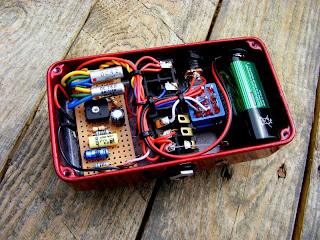
Here’s an after-addition: The D*A*M Superbee, which is a variation of the Vox Tonebender circuit with larger input and output caps:

And some lovely gut shots:
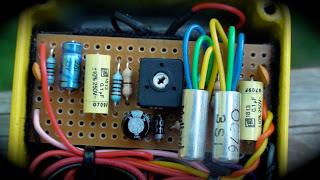
And a demo video of the Super Bee in action:
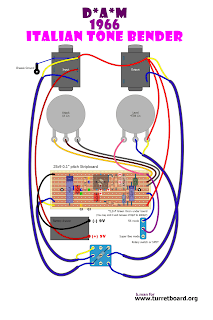
And a great layout by beedotman:
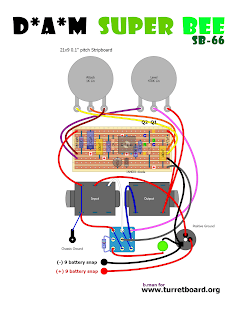
Pick your gains for the transistors. Beedotman’s recommended start values are 60-75 hfe for Q1 and 75-105 hfe for Q2. Q2’s collector is biased around -6 volts.
And the freestompboxes.org forum topic: http://freestompboxes.org/viewtopic.php?f=13&t=13626