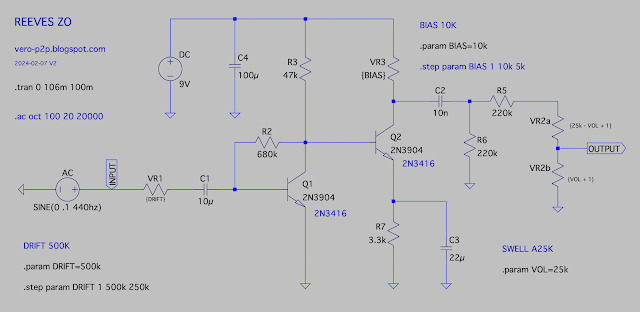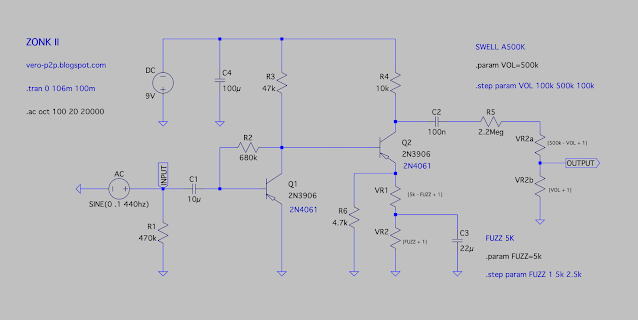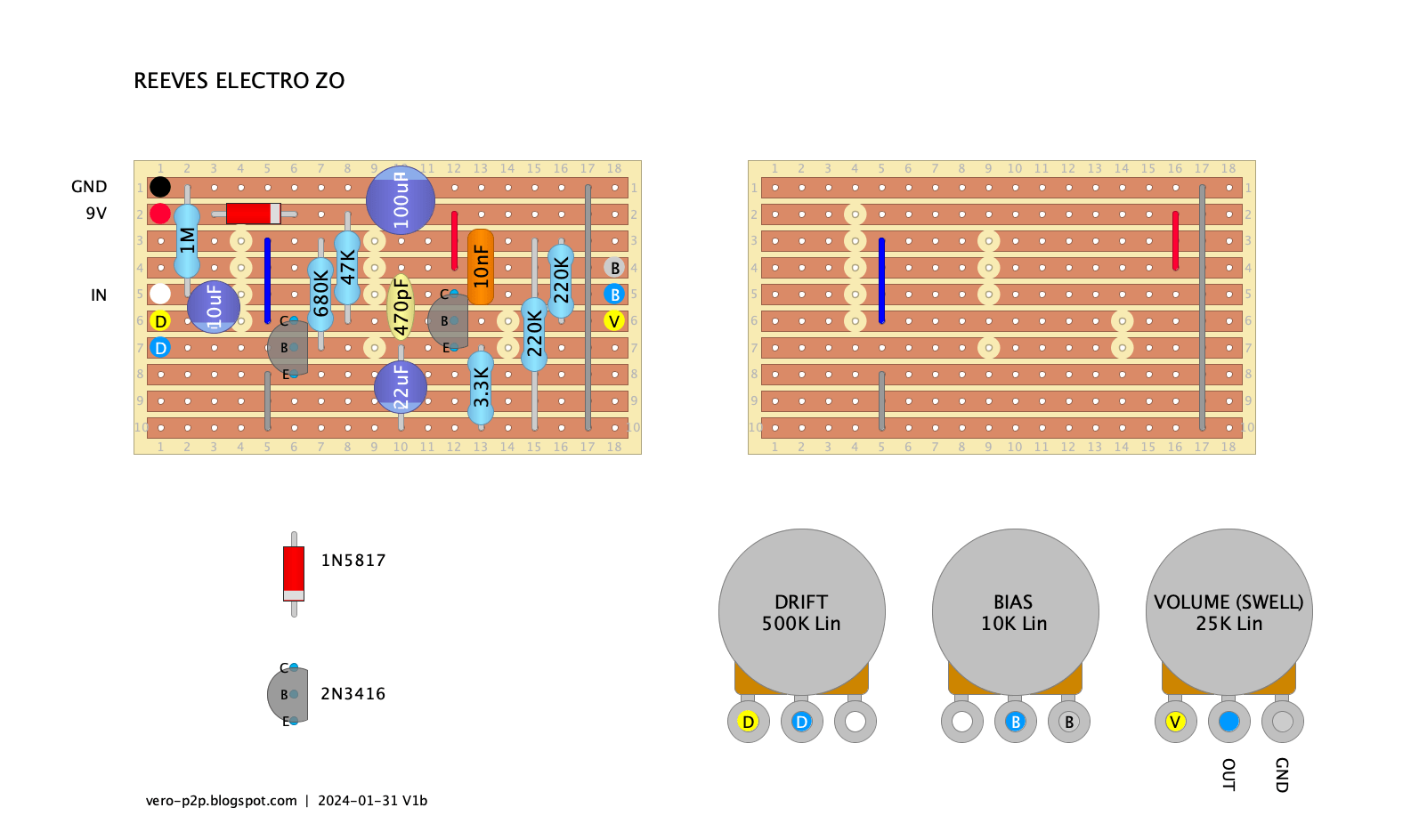
I saw this on the Gray Bench Electronics youtube channel, and given the cost and apparent popularity of Reeves pedals, I thought I’d post a layout. The schematic is also on screen for a lengthy period of time.
In depth explanation provided at Gray Bench, but in short, it’s a silicon two-transistor Zonk II with mods. There were multiple versions of the Zonk II back in the sixties, with distinctly different circuits – just scroll through the page on fuzzboxes.org to see what I mean.
Be sure to read the comments on this post, as there is some valuable info regarding changes / updates to the circuit – and like almost any simple fuzz, get it on a breadboard and have some fun with it before committing it to a board.
REEVES ELECTRO ZO – VERO LAYOUT
I added a polarity protection diode to the circuit, cause why not when there’s room.
From Mr Reeves in the comments: “as of the facelift version with new transistors (2n2926) the output pot is 100k”
ZO NOTES
- the 10k bias pot is sometimes replaced with a fixed resistor
- the 470pf cap is not always present (value is potentially much smaller – 47pf)
- and read the rest on youtube…
ZO x ZONK II
Just a quick reference to the schematics – the Reeves schem is redrawn from the Gray Bench video & the silicon Zonk II is from all the usual places – but with the addition of the pulldown resistor that’s visible in vintage units, but missing from a lot of schematics.
As you can see, they share the same bones, but with a few key differences. Notice the output cap differences – the Zo rolls off a bit more bass than the Zonk, and with the 470pf cap, a bit of treble goes missing too (apparently not all Zos have this cap, and it may be much smaller).
They both should have a decent amount of output, but the Zo should have more than the Zonk by a fair margin.
Spice did not have the right silicon transistors, so I just used the plain old 2N390X in each one for a fair comparison between an NPN & PNP circuit.