This is a Pete Cornish SS-2 using Joe Davisson’s diode-compression op amp. It sounds pretty good – a lot like the regular SS-2, but without any distortion artifacts on sustained notes as it fades outs. It’s also quieter in terms of noise. This one is getting boxed up, and now I want to try a SS-3 version.
For my ears it sounds best at 18v, and with a Cornish buffer in front. You can notice the buffer on cleaner sounds in particular, as the high frequencies are a little brighter. 18v sounds more open with better string clarity. 9v still sounds good, but it’s more compressed and less dynamic in my opinion – may be a tad thicker sounding as a result of this, which some people may like.
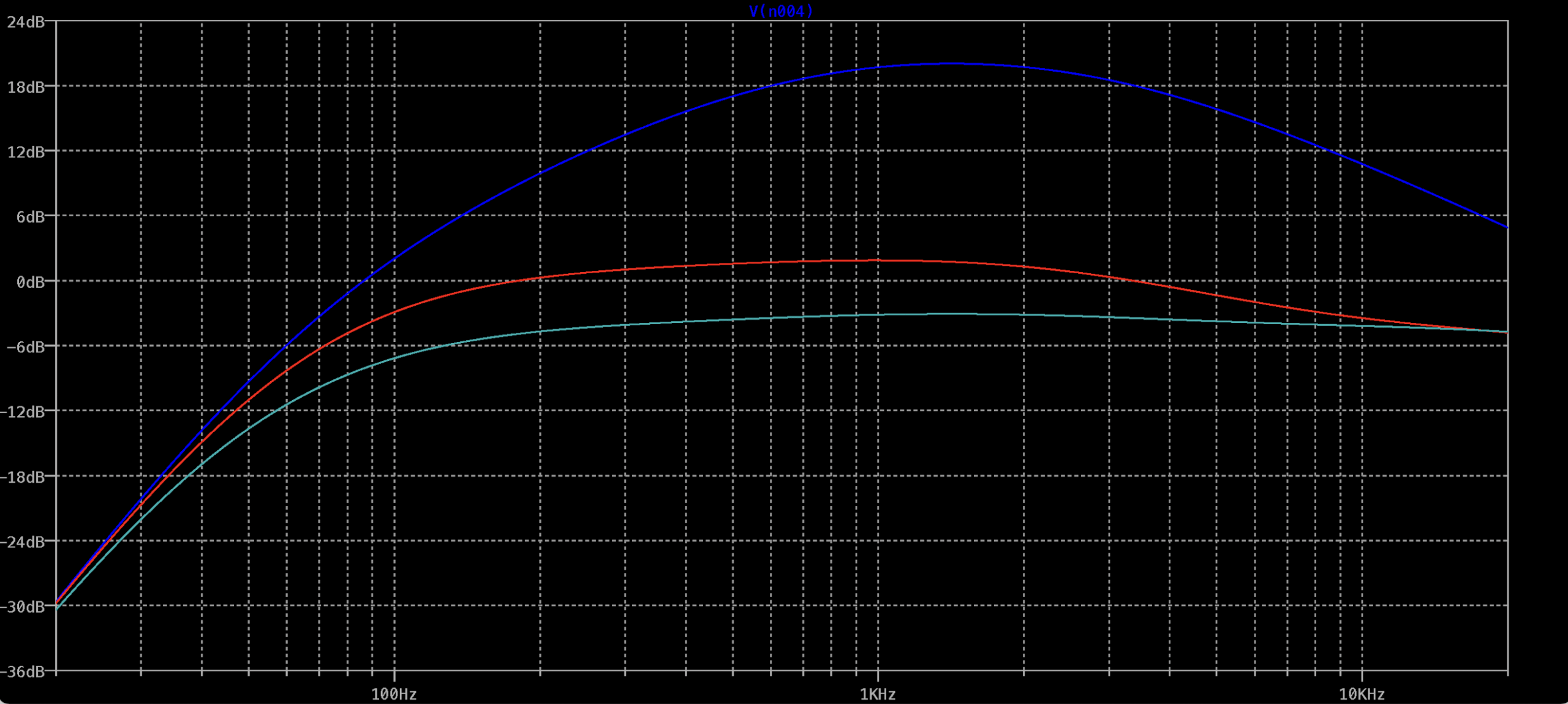
Being based on the MXR Distortion +, higher gain settings roll off bass and treble to provide more of a mid-hump. It also sounds pretty good with the tone control wound all the way back. Low gain settings sound pretty nice too, as the frequency response flattens out.
The tone control is definitely needed as the treble can need a bit of smoothing out on some settings. It works well for a simple tone control.
I tested it on a transistor and valve amp – both had their own charms. Could not say which one I preferred. The valve amp liked it more when it was just breaking up, and then pushed with the SS-2 – but then again when doesn’t a valve amp not like being pushed on breakup?
Things to tweak if you feel like playing around with the tone;
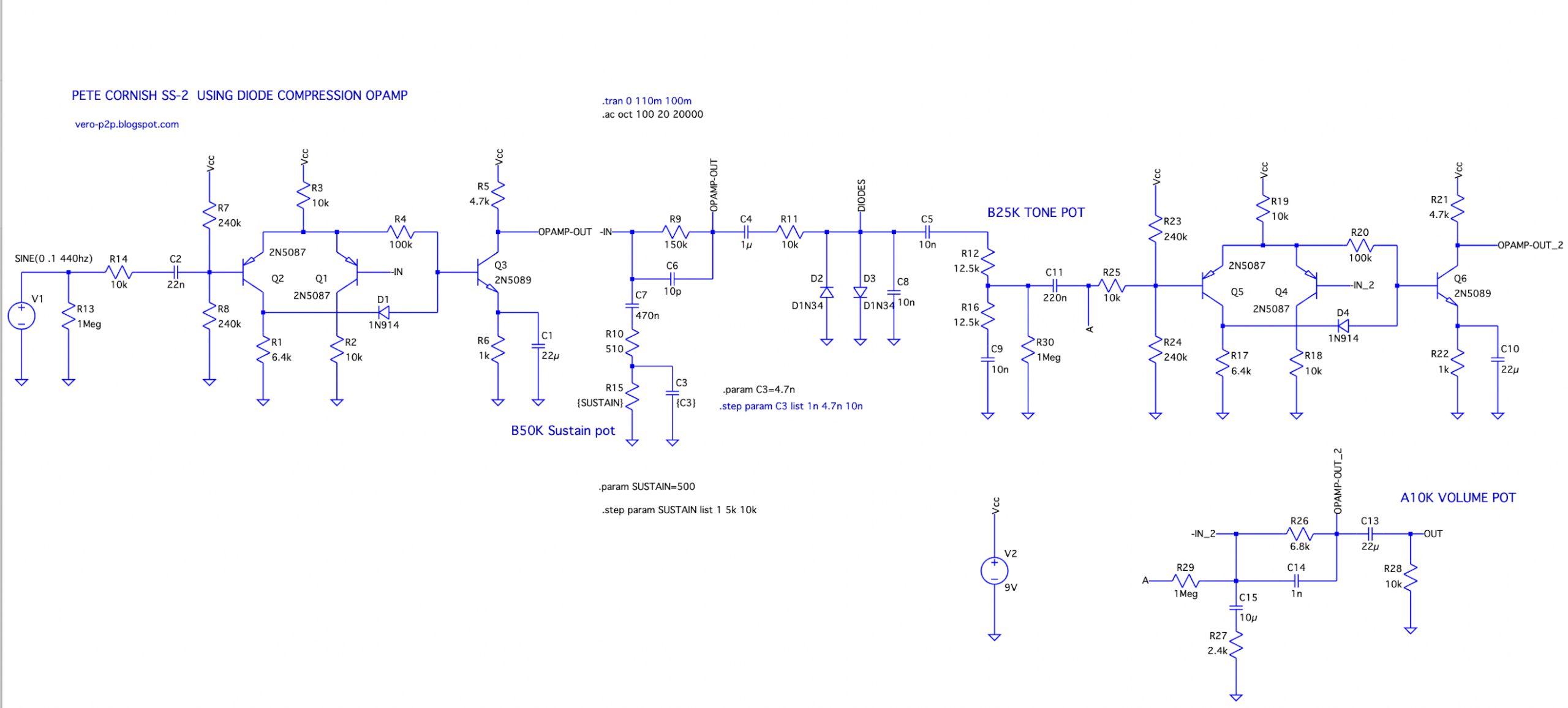
- C2 – definitely increase to 22n (input cap). 10n forms a 66hz HPF with R8, 22n forms 30hz HPF
- C8 – 10n capacitor paired with diodes to ground (forms a 1.5khz LPF with R11)
- C5 – 10n capacitor from clipping section into tone 3, rolls off some bass (I’m using a 22n here)
- C9 – 10n capacitor from tone 1 to ground
- Germanium Diodes: different combinations, types – usual diode mods…
- Reverse log gain pot like the SS-3
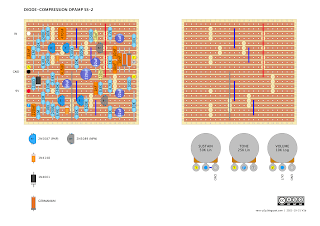
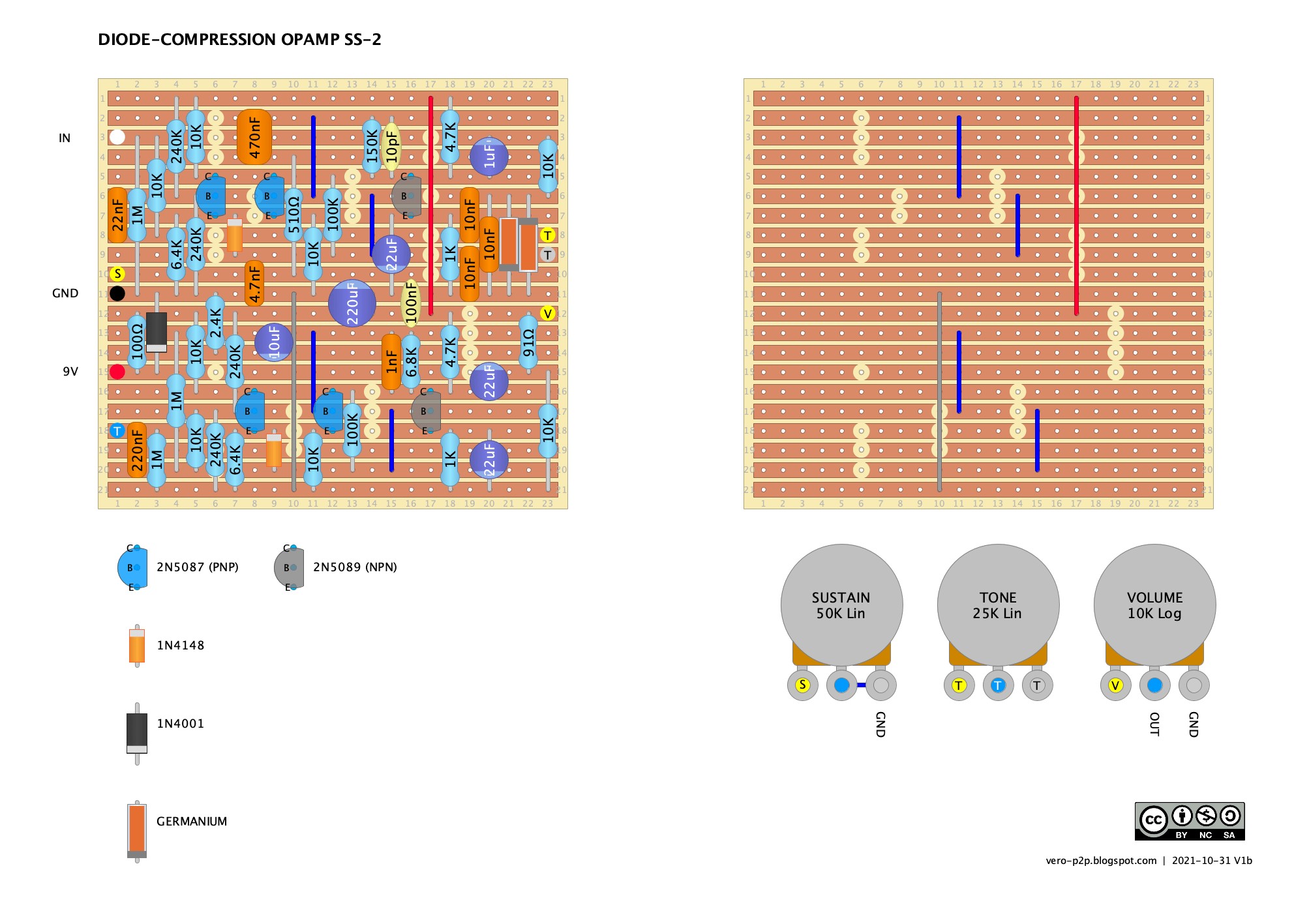
CORNISH SS-2 USING DIODE COMPRESSION OP-AMP – VERO LAYOUT
SCHEMATIC
FREQUENCY RESPONSE – LOW TO HIGH GAIN
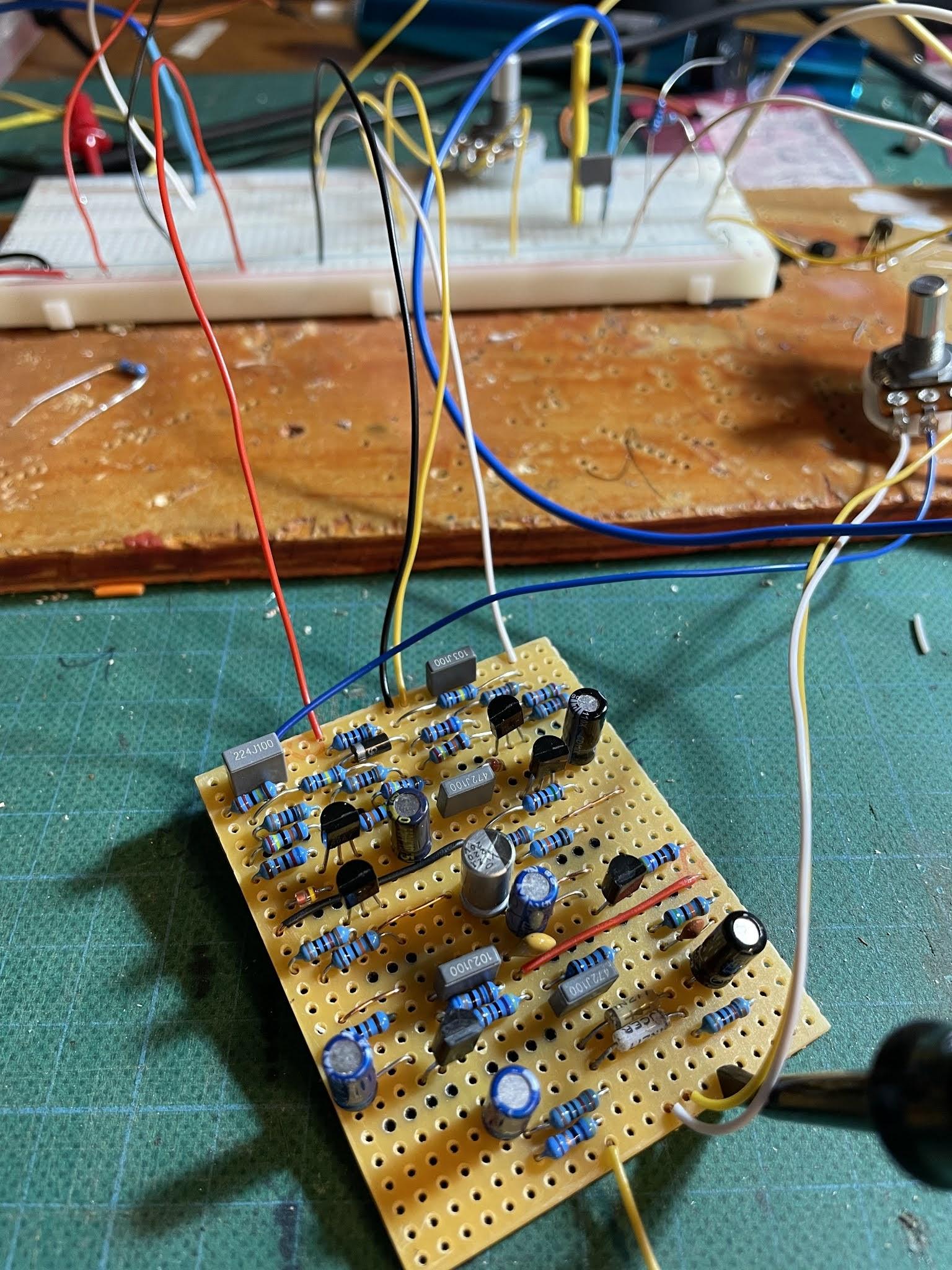
ON THE BENCH TESTING SOME CAP VALUES
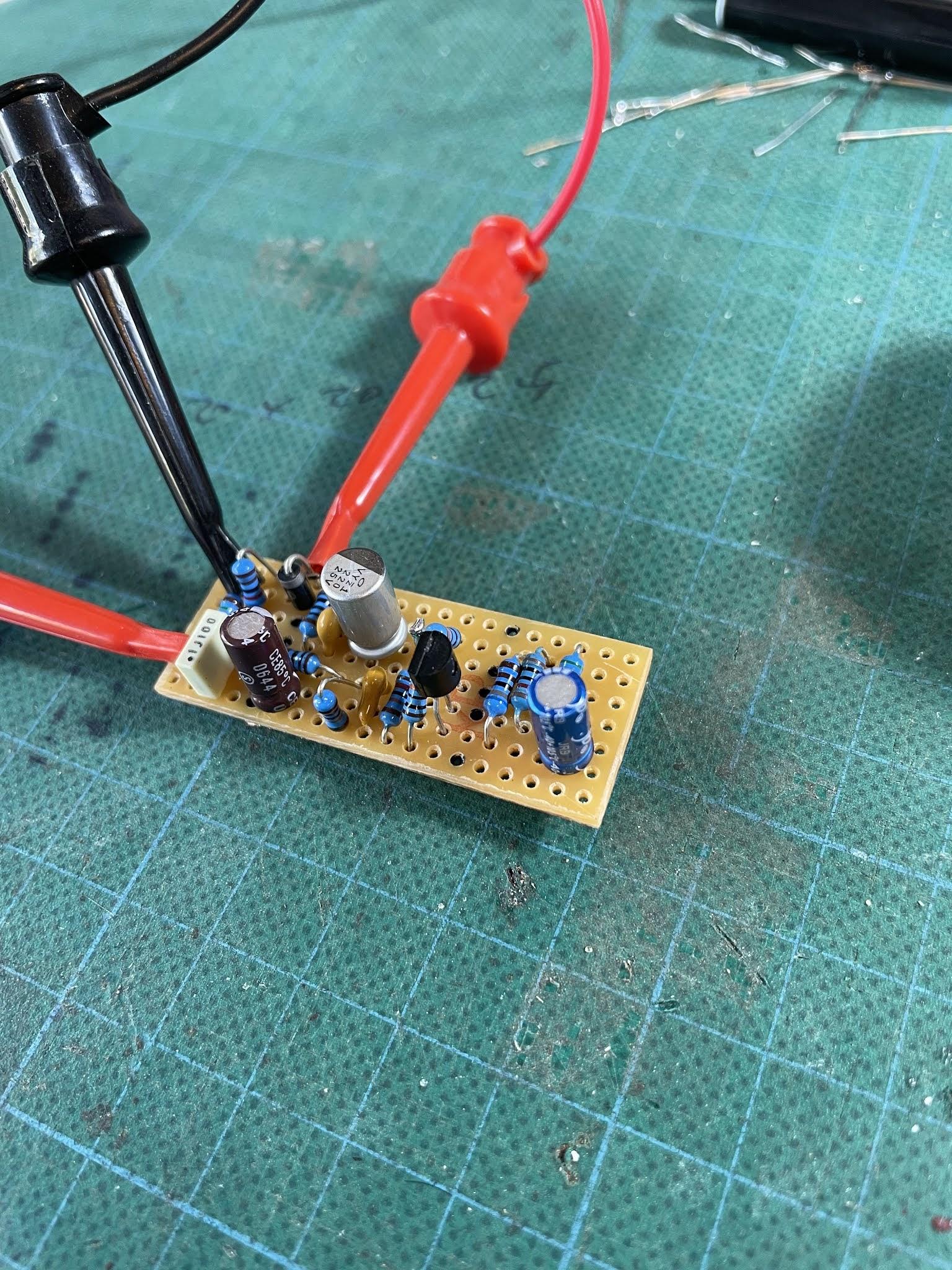
And a buffer to match
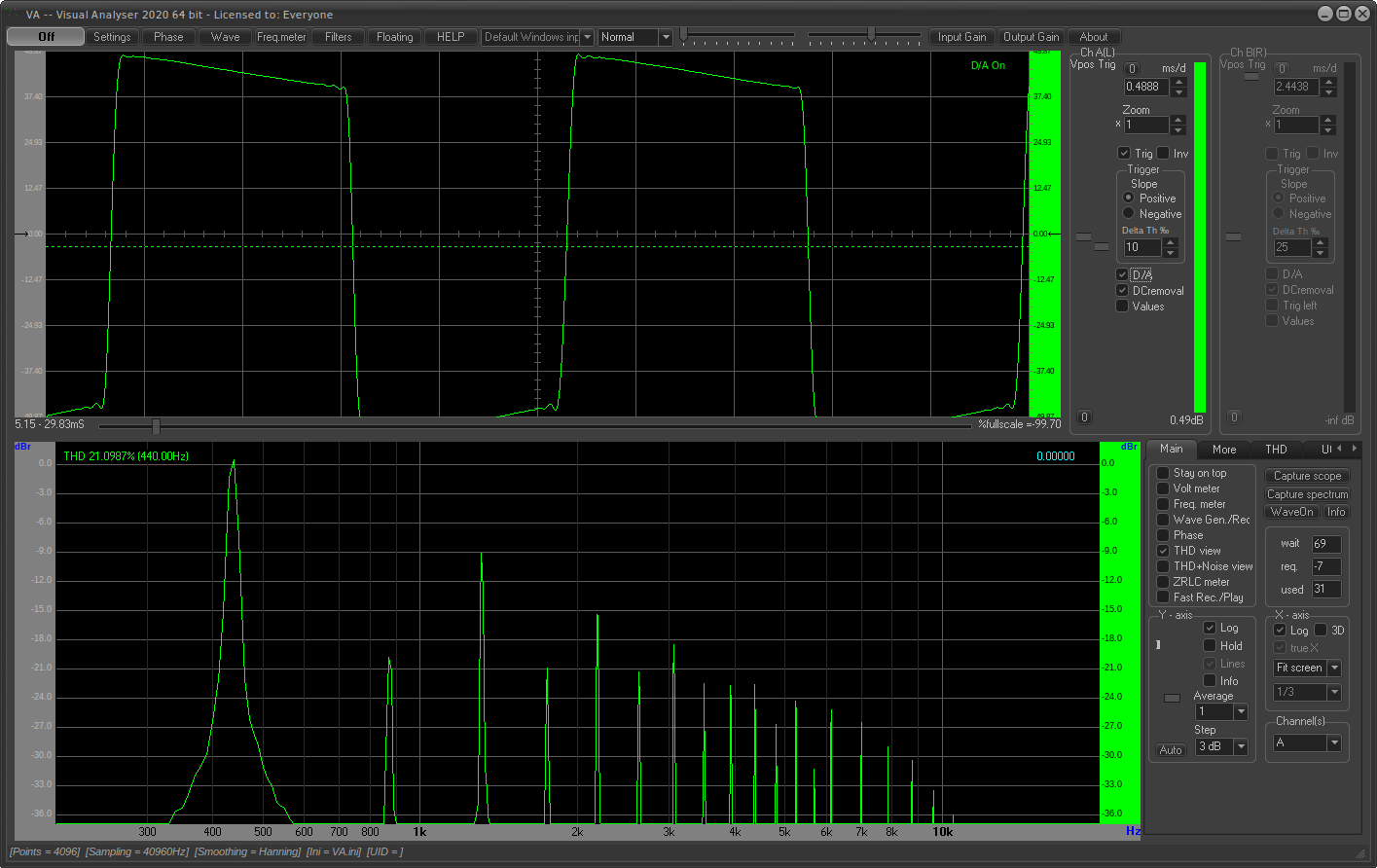
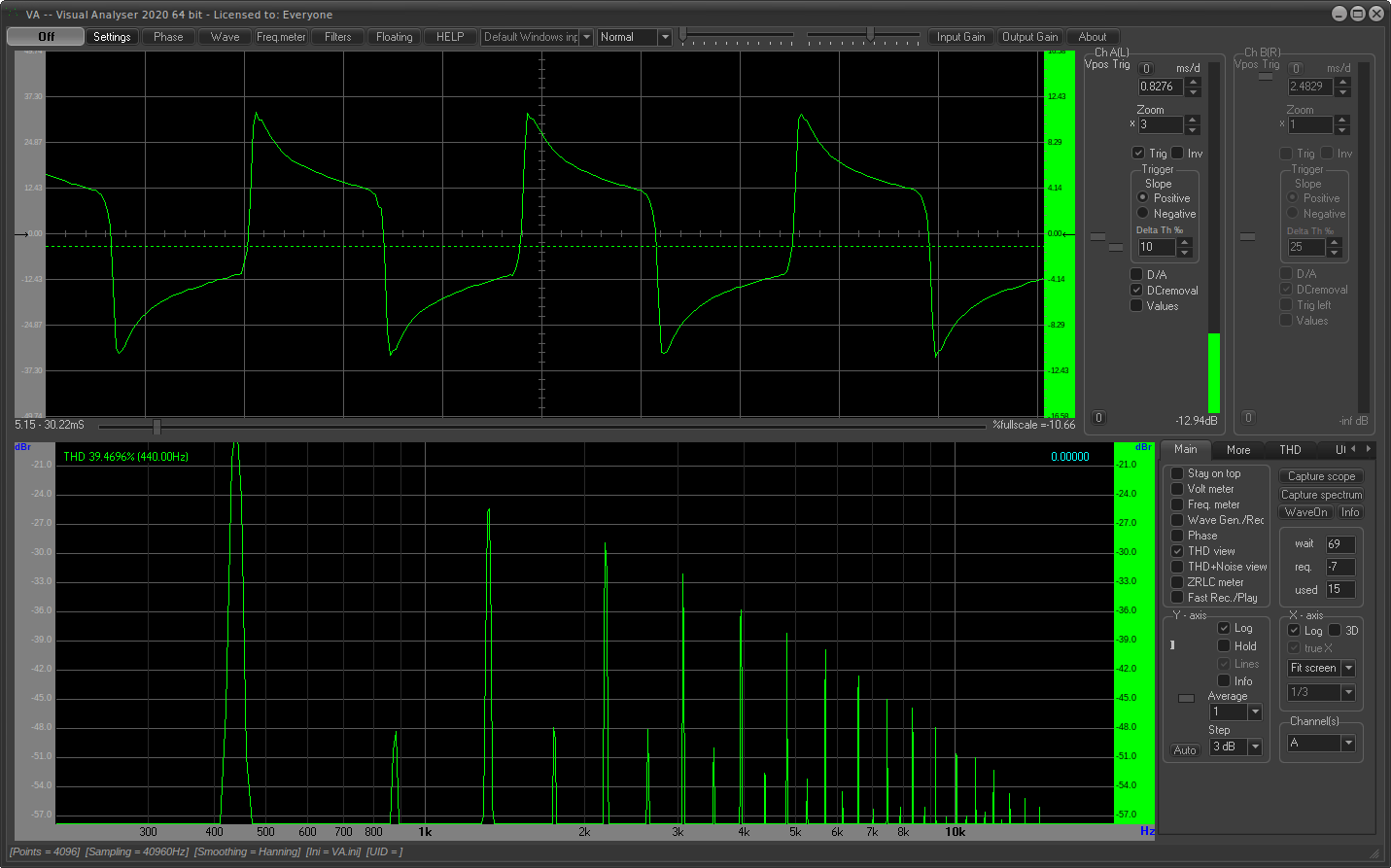
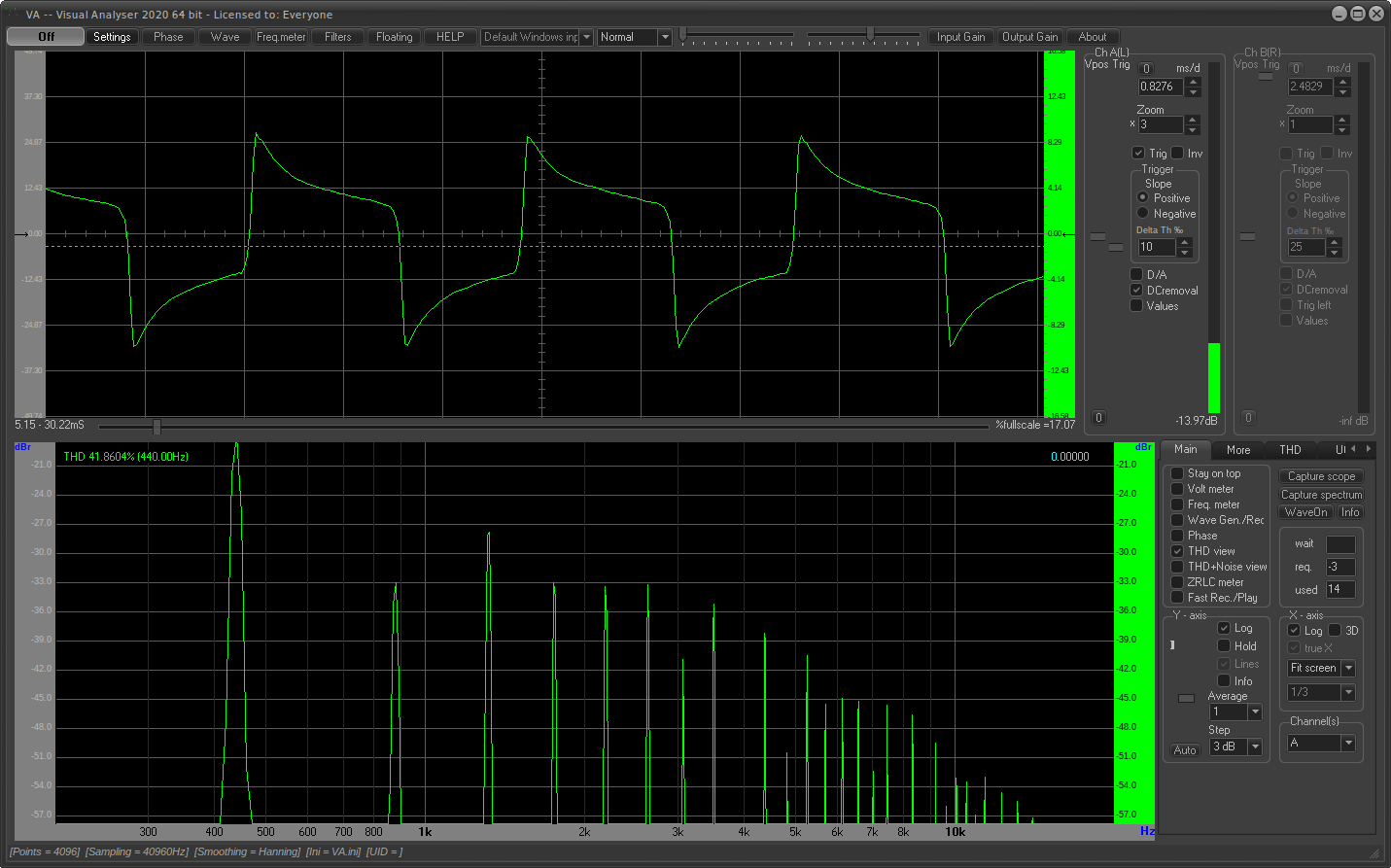
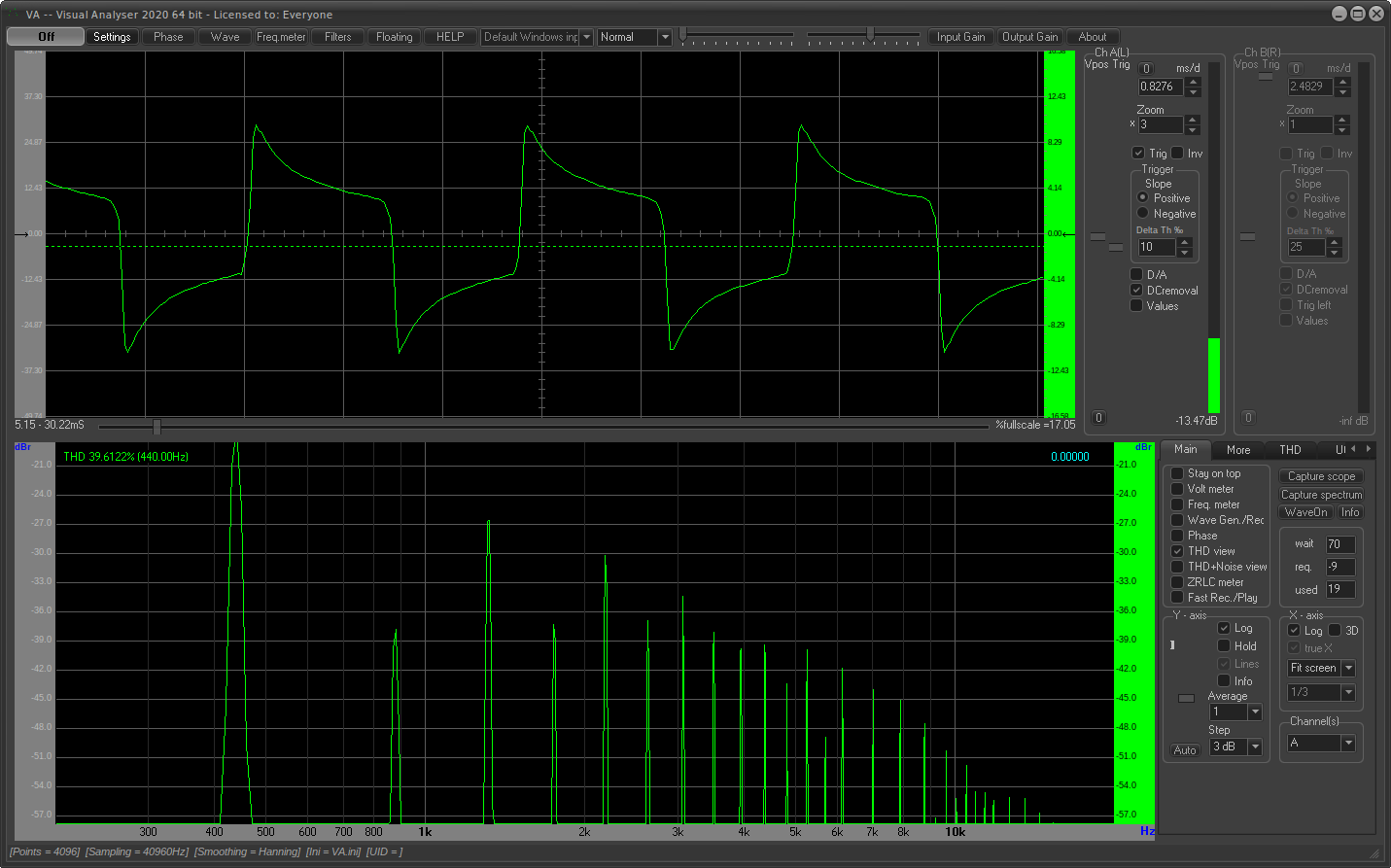
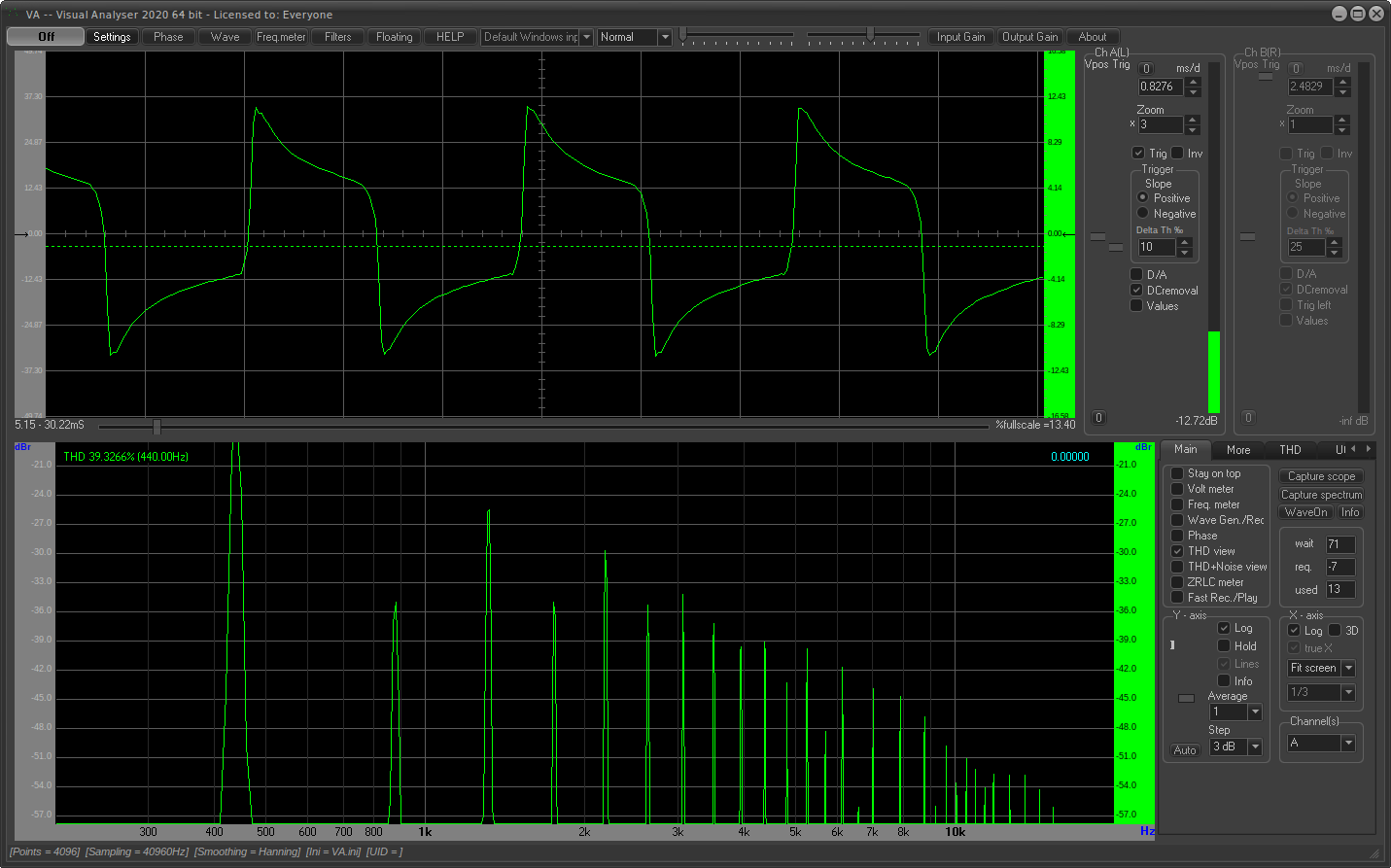
ON THE SCOPE
caution – start with low volume levels
VOLTAGES
ON THE BREADBOARD
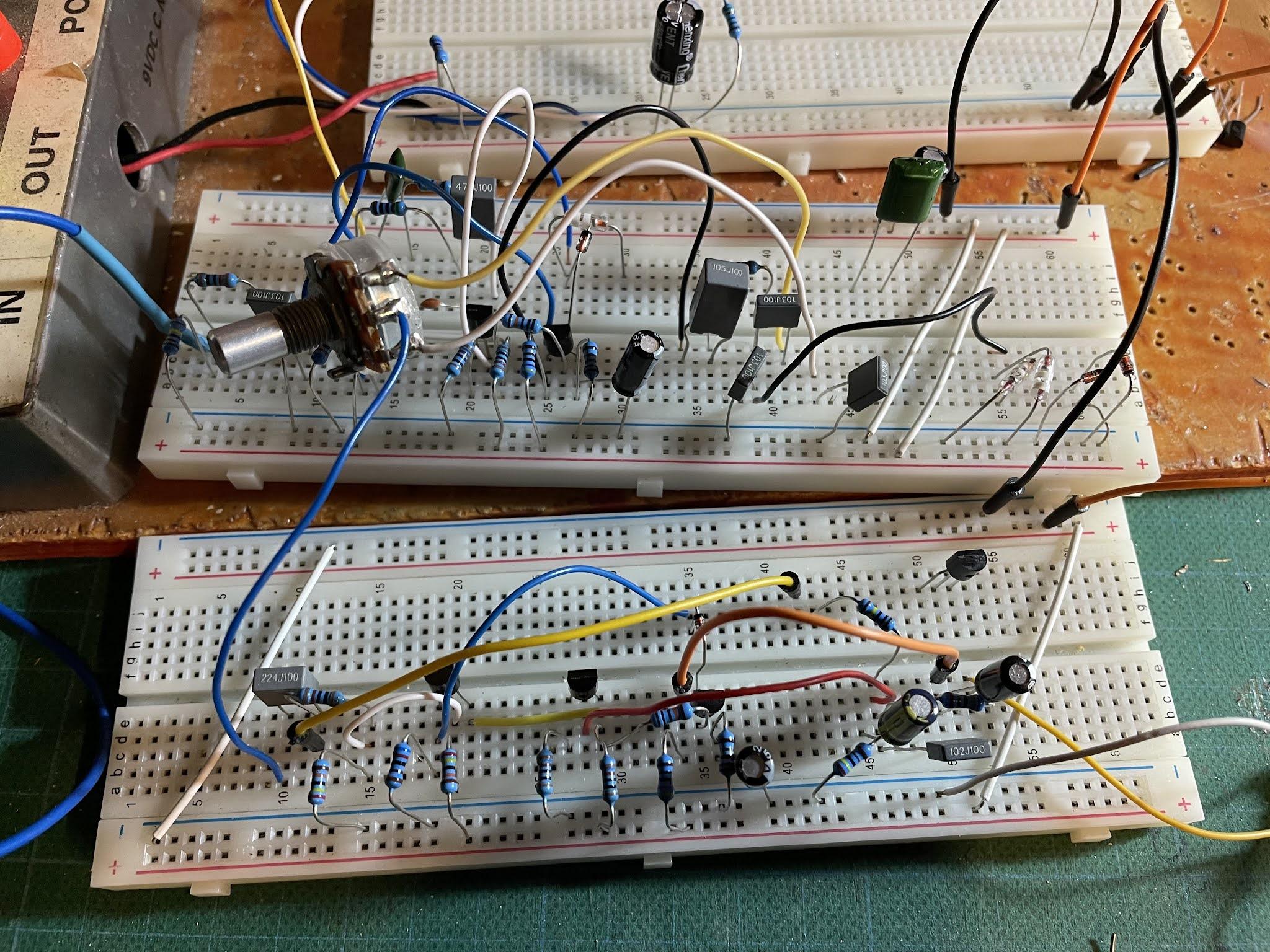
And here’s the mess that was the breadboard