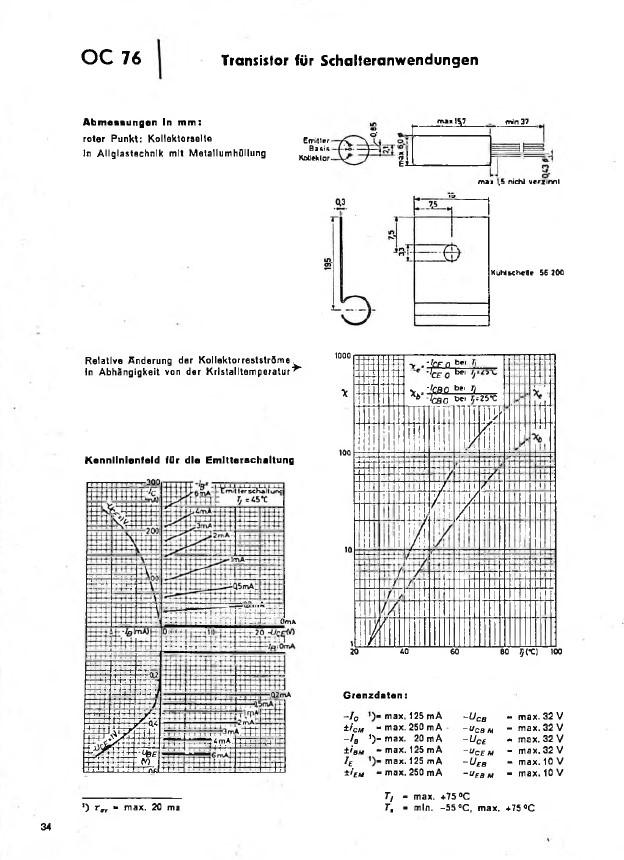
GEC: Germanium Signal Transistors (1971 Semicondcutor Handbook)
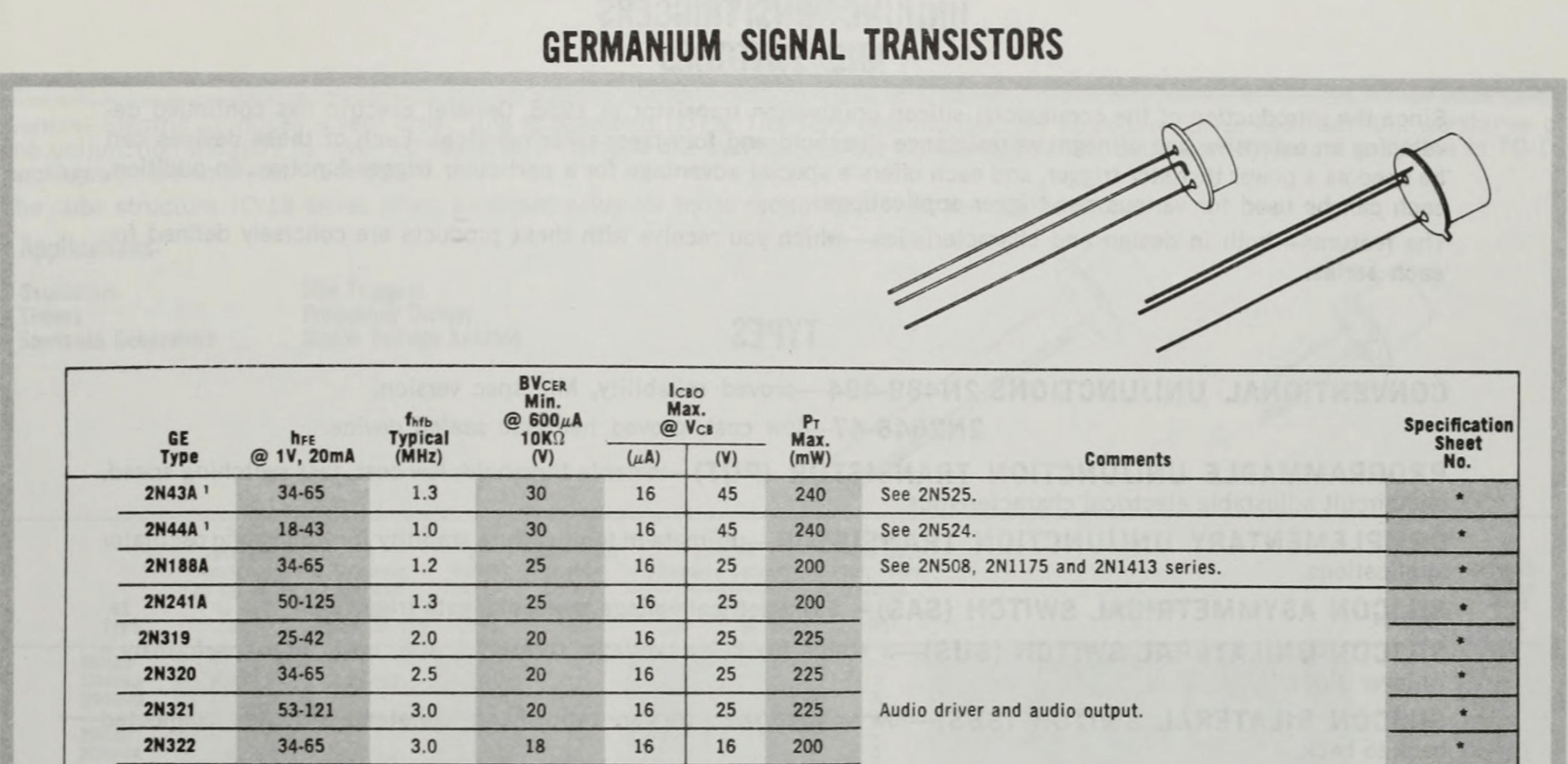
From the General Electric semiconductor handbook, 1971
Tools, Tones and Toys for Guitarists
From the General Electric semiconductor handbook, 1971
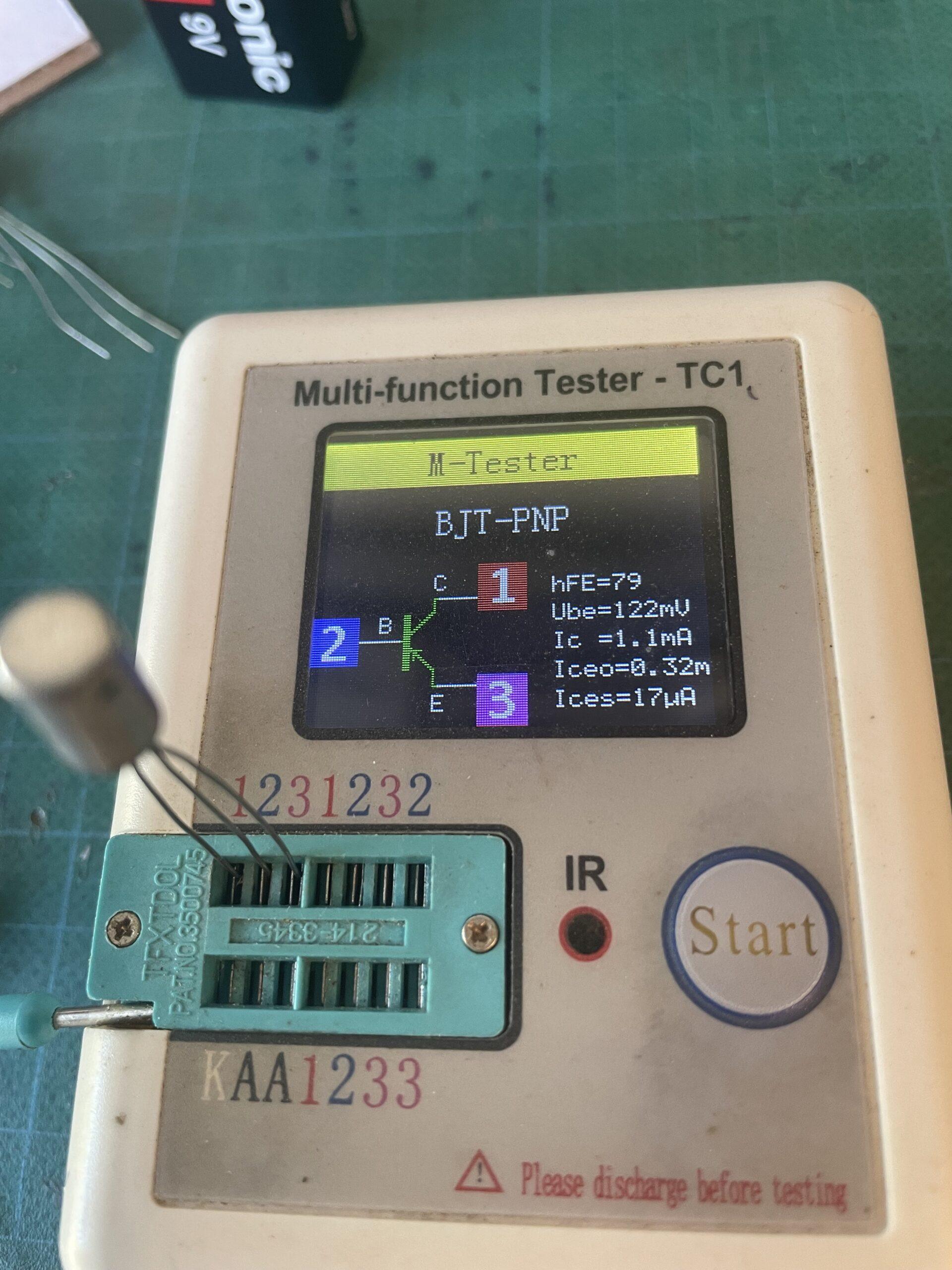
I saw a post today about leakage and temperature, so I thought I’d do a quick test myself to see how close it came. The test distinctly lacked scientific conditions – for starters I wasn’t even wearing a white coat at the time, but the results seem to match the theory. For germanium transistors, leakage … Read more
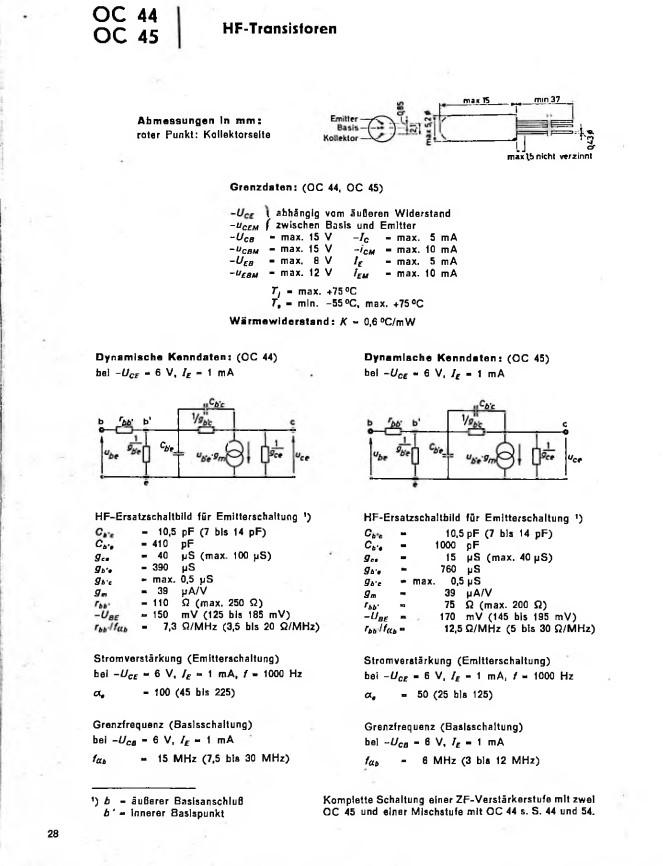
Valvo transistors were produced in Germany, as a subsidiary of Philips (not unlike Mullard in England). More information on Valvo can be found here. My experience with Valvo, is that they are pretty much identical to their English counterparts. The OC45 is a PNP germanium alloy transistor intended as IF amplifier in AM broadcast receivers. … Read more
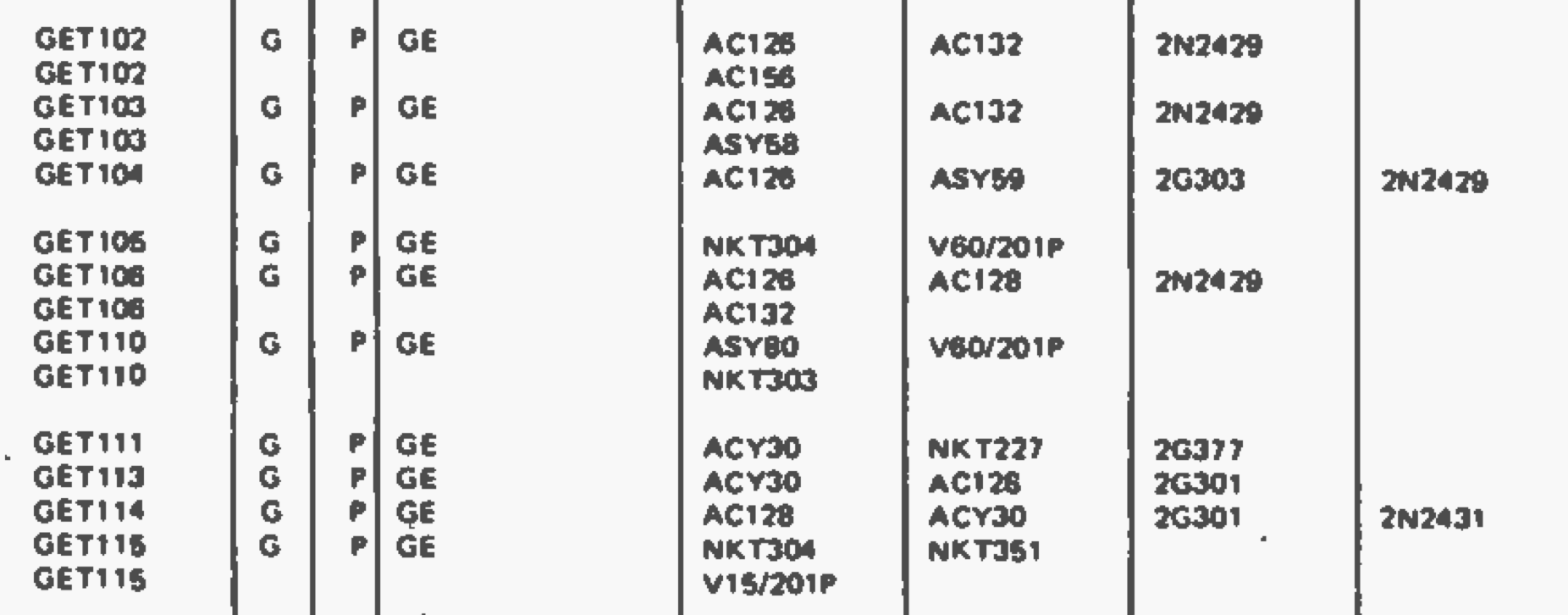
GEC is the General Electric Company of England, not the one from the U.S.A. These are occasionally branded as Mullard. Full write-up on GEC / GET transistors can be found here GEC GET 102 – 114 GERMANIUM TRANSISTOR DATA Type V Max Hfe P Max (mW) I Max f (Mhz) GET102 30 … Read more
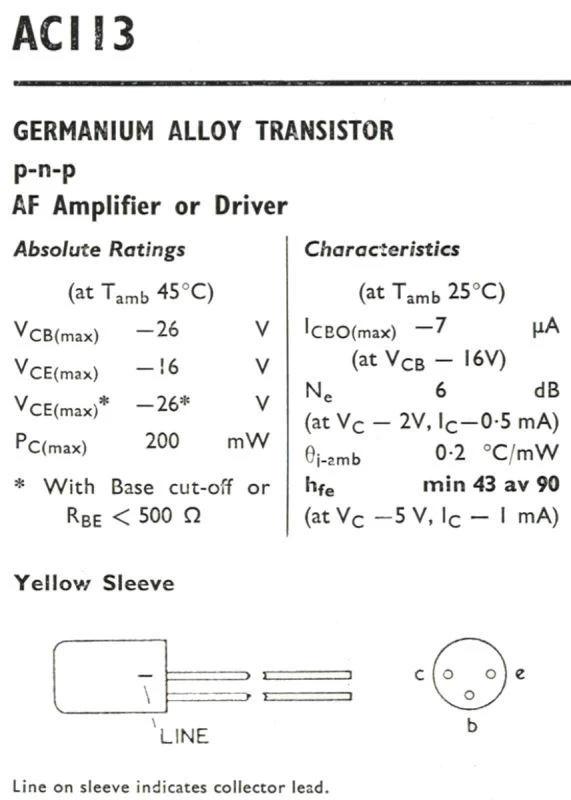
Brimar transistors were made by Thorn and were also commonly branded as Mazda. A full write-up can be found here The AC113 is an audio frequency amplifier or driver type germanium transistor. AC113 GERMANIUM TRANSISTOR DATASHEET TRANSISTOR EQUIVALENTS Being a fairly generic audio amplifier, they’re listed as being similar to a number of common amplifier … Read more
Germanium transistors from the former USSR are cheap, generally high quality, available in large quantities and very cheap compared to their European counterparts. They are their own thing and are not direct copies of European transistors – you can find similar transistors, but they are never like-for-like replacements. They nearly always sound different and … Read more
This has been transcribed from the U.S. Joint Publications Research Service No. 569 from 1978. Translations of Eastern European Scientific Affairs. Among other things, it contains a guide to Soviet semiconductors. The publication can be found in this folder. It’s a handy guide to Soviet transistor and diode numbering, as well as their … Read more
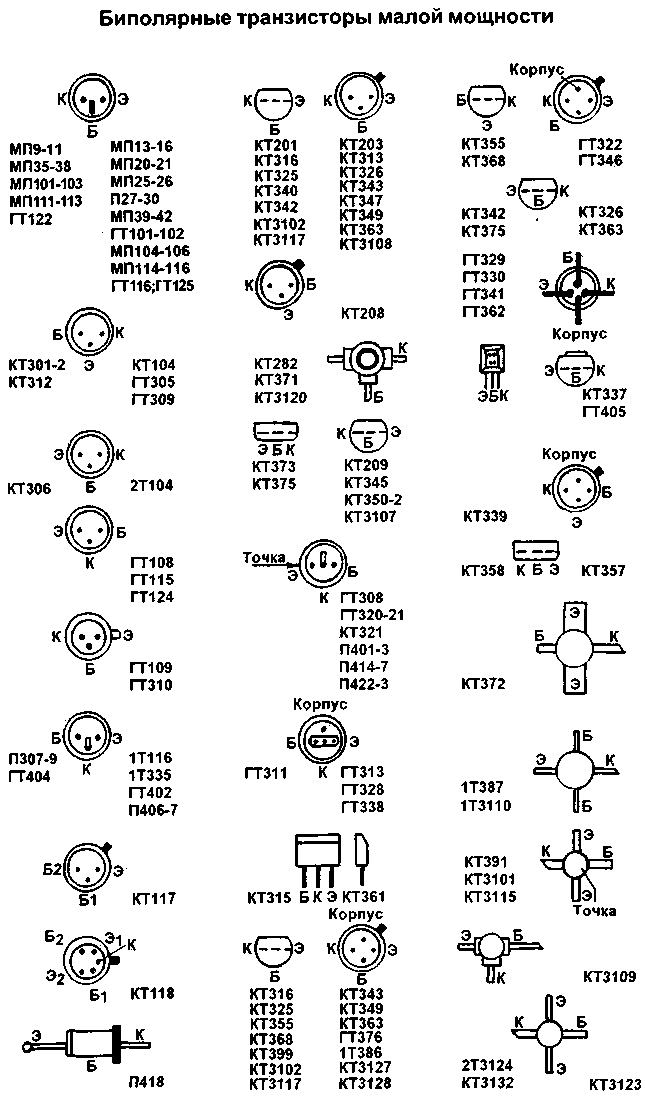
Just a little reference to Soviet-era transistor pinouts. SOVIET TRANSISTOR PINOUTS note: in addition to potentially different pinouts, some Soviet-era transistors can have the case connected to the base – which is not good if it touches anything else. The dot on the case usually marks the emitter, not the collector as often found on European … Read more
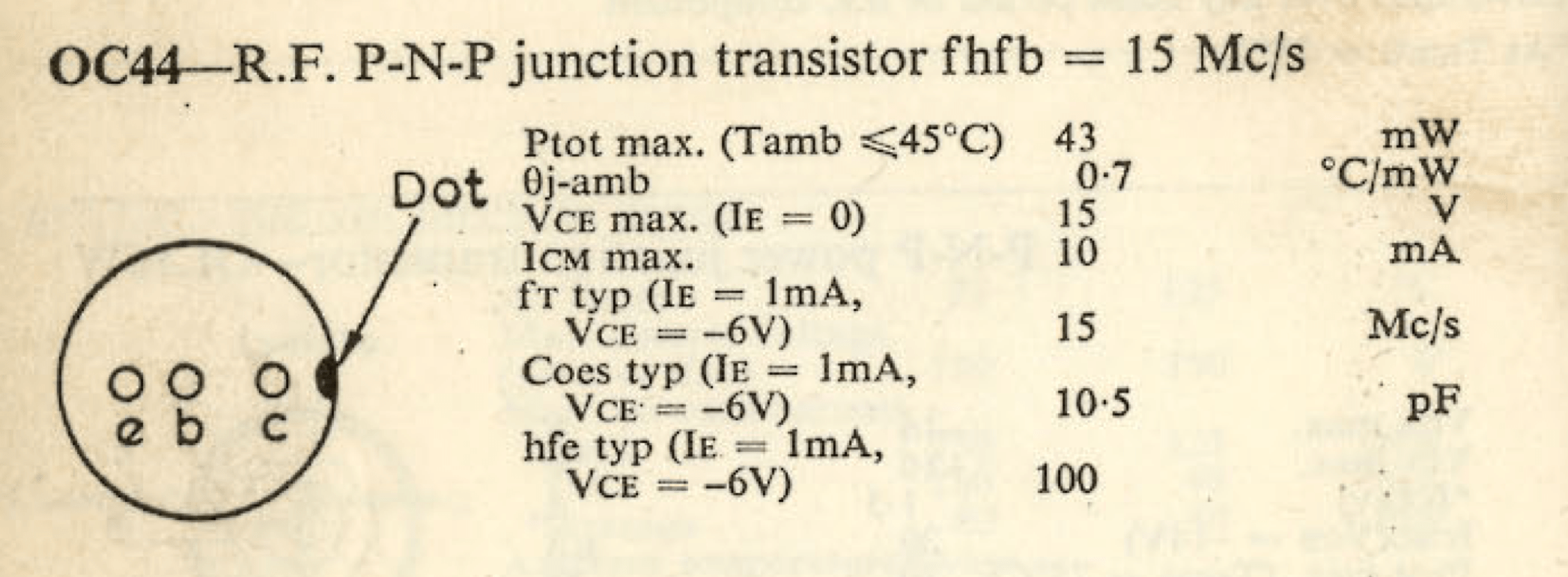
Transistor datasheets from Mullard for; Germanium: OC44, OC45, OC70, OC71, OC72, OC74, OC75, OC78, OC81 and OC81D Germanium: AC126, AC127, AC128, AC176, AC187, AC188 Silicon: BC107, BC108, BC109, BC186, BC187 MULLARD DATA BOOK 1965 – 66 MULLARD DATA BOOK 1974 – 75